
Planning for 2060 AI: How to Make Uncertainty Auditable
Most 2060 AI plans fail when assumptions drift. Learn practical forecasting and governance methods to quantify uncertainty and keep decisions defensible.
1) Why 2060 AI plans break: hidden assumptions, shifting baselines, and narrative lock-in
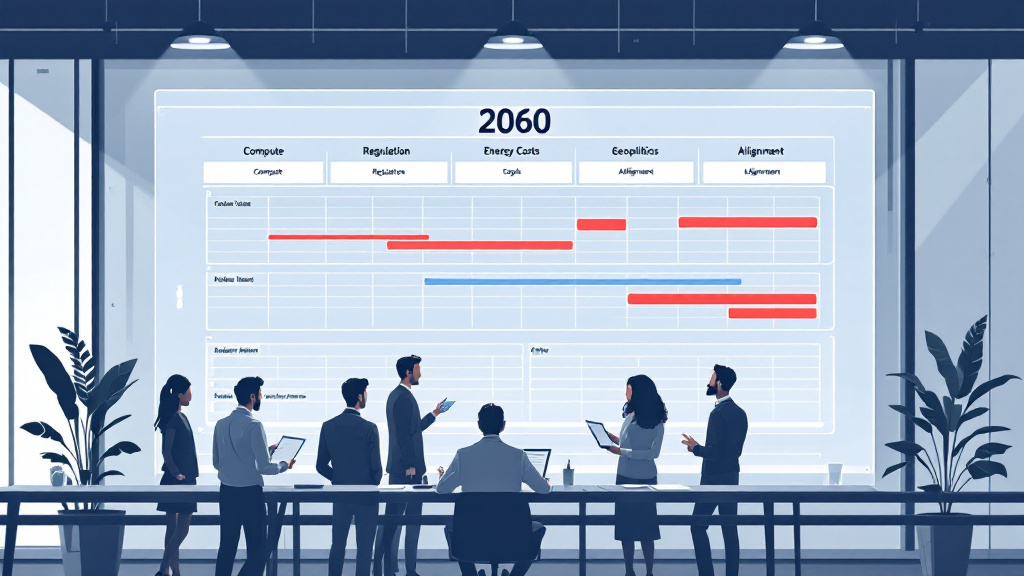
Long-horizon ai-strategy often collapses for a simple reason: it’s built on untracked assumptions. Teams inherit a storyline (“AGI by 2040,” “regulation will loosen,” “energy will be cheap”), then treat it as a stable baseline. When any input changes—compute costs, geopolitics, alignment progress—the plan doesn’t update cleanly. Instead, the narrative gets patched with new slides, leaving no audit trail for what changed or why.
This failure mode is amplified by siloed work. A policy team runs scenario-planning in one deck, investors run market theses elsewhere, and risk teams maintain separate governance artifacts. Without a shared evidence spine, forecasts become debates about credibility rather than trackable forecasting claims. The result is uncertainty that is felt—but not measured—so decisions can’t be defended later.
To make 2060 planning reliable, treat uncertainty as a first-class object. That means replacing “one future” with structured scenarios, attaching evidence to each claim, and using governance practices that preserve decision context over decades.
2) Quantify uncertainty so it can be audited: ranges, confidence, and sensitivity
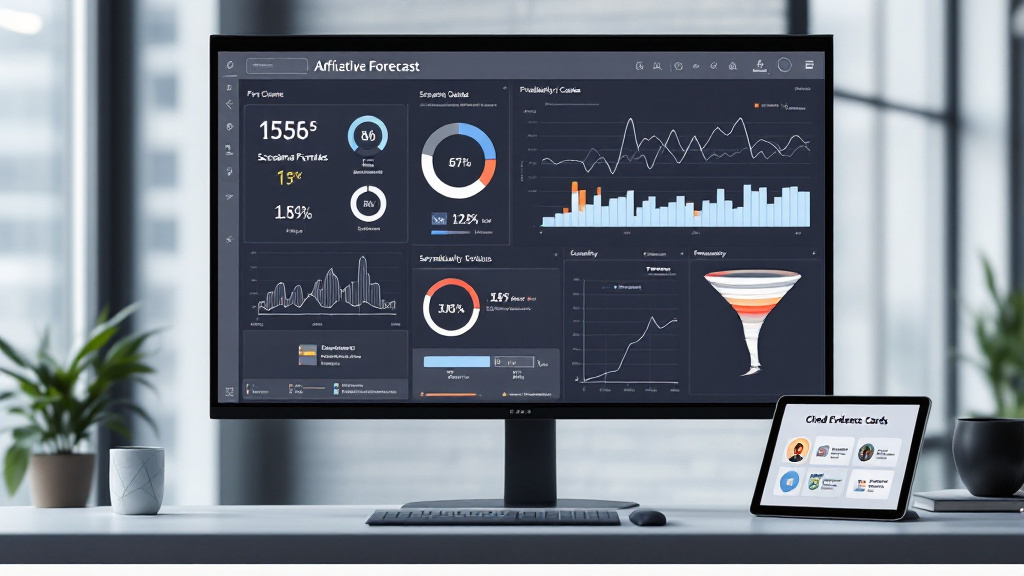
Auditable uncertainty starts with expressing outputs as distributions, not declarations. Instead of “autonomous rail dispatch will be standard by 2060,” use ranges and probabilities: adoption likelihood (e.g., 30–70%), impact intervals, and confidence bands tied to evidence quality. Techniques like Bayesian updates and Monte Carlo simulation are practical here: they force explicit priors, convert assumptions into parameters, and produce outputs you can test for sensitivity.
Next, run sensitivity analysis to identify which assumptions dominate outcomes. In scenario-planning, this becomes a ranked list of “swing factors” (energy prices, enforcement capacity, chip export controls). In forecasting, it becomes a map from signals to model deltas: which new paper, regulation, or deployment would meaningfully move your probability mass.
Finally, link every probability to its evidence. Use citations and short rationales (“based on X studies,” “dependent on Y policy change”), so later reviewers can trace why a confidence range looked reasonable at the time—an essential bridge between uncertainty and operational governance.
3) Build an assumption ledger and decision records that survive new evidence
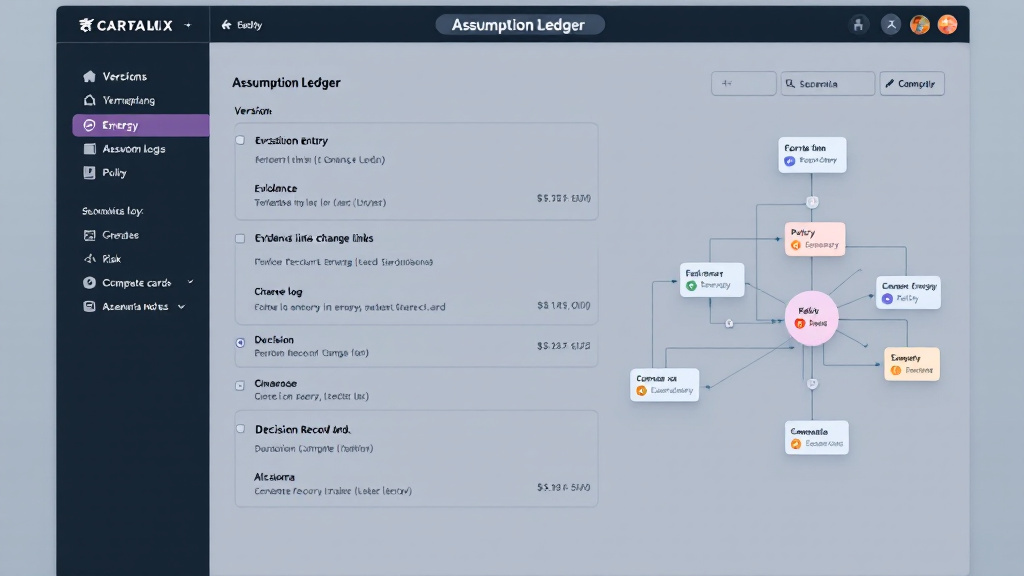
Quantification is only half the job; you also need a durable memory. Create an “assumption ledger” that lists each key premise (e.g., energy cost trajectory, regulatory strictness, alignment milestones), its current value or range, its owner, and the evidence supporting it. Version the ledger so you can answer: what did we believe in 2026, what changed by 2032, and which signals triggered the update?
Pair the ledger with decision records (lightweight memos) that capture: the choice made, the scenarios considered, the uncertainty ranges, and the guardrails. This is governance that scales—especially across ministries, enterprises, and think tanks—because it turns planning into a repeatable workflow rather than a one-off workshop. Importantly, it also enables “replay”: if a stakeholder challenges a 2060 bet, you can rerun the model using the historical assumption set.
Platforms like HorizonSignal Futures operationalize this approach by generating evidence-linked sector maps, prerequisites, and risk mitigations—then scheduling updates as new signals arrive. That’s how ai-strategy becomes defensible: not by predicting perfectly, but by keeping uncertainty auditable.